

We Cut Down as Many Trees as Belgrad Forest for Paper Cups
In Turkey, 2 billion paper cups are consumed each year. Considering that producing 1 ton of paper requires cutting down an average of 10–17 trees, we are destroying 500,000 trees annually for paper cups, and in just three years, we will have cut down as many trees as in Belgrad…
In Turkey, 2 billion paper cups are consumed each year. Considering that producing 1 ton of paper requires cutting down an average of 10–17 trees, we are destroying 500,000 trees annually for paper cups, and in just three years, we will have cut down as many trees as in Belgrad Forest.
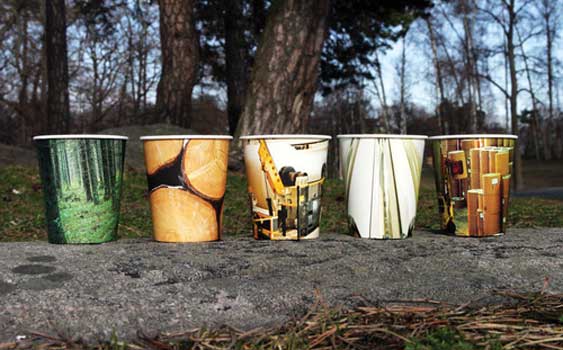
In today’s world, where global warming has become a major issue and environmental problems are growing exponentially, the conscious use of limited natural resources is crucial. From this perspective, the fact that 500,000 trees are cut down annually in our country just for paper cups presents a scenario that deserves serious reflection. Calculating just a few years ahead paints an even more alarming picture: in three years, we will have destroyed as many trees as in Belgrad Forest.
Comparisons between plastic and paper cups regarding their environmental impact are frequently made in public discussions. However, misinformation often confuses people. When we move beyond personal opinions and look at scientific data and research results, the numbers show that plastic cups consume less energy during production, use, and recycling stages. Moreover, the inner surfaces of paper cups are coated with plastic to prevent liquids from soaking in. Due to this structure, paper cups cannot be recycled by either the paper or plastic industries and end up directly as waste.
Global Carbon Clear, a company known for its work on carbon emissions, conducted a study comparing the carbon footprints of disposable paper and plastic cups. According to their findings, producing and using 75 cups requires 20 MUe (million units of energy) for plastic cups, whereas 75 paper cups require 30 MUe. Accordingly, paper cups lead to 50% more resource consumption and carbon emissions compared to plastic cups. Using 2,000 paper cups results in 1,100 kilograms of carbon emissions, while 2,000 plastic cups emit only 430 kilograms. Carbon emissions from energy use in paper cups are nearly three times higher than in plastic cups.
Prof. Dr. Levent Kurnaz, a faculty member in the Physics Department at Boğaziçi University, also emphasized that plastic cups consume less energy in production compared to paper cups, stating: “The energy used comes from fossil fuels, so less energy means lower greenhouse gas emissions, which contributes less to climate change. Additionally, producing plastic cups requires petroleum, which otherwise would have been burned, releasing carbon dioxide into the atmosphere. Trees are cut down for paper, which also has a negative impact on climate change that cannot be ignored.”
