PHA Revolution in Packaging: Fully Recyclable Materials Are Now Becoming a Reality
Source: fuardergisi.com PHA Revolution in Packaging: Fully Recyclable Materials Are Now Becoming a Reality One of Turkey’s leading platforms in sustainability, the 11th Sustainable Food Summit, this year focused on a profound transformation in the food and packaging sectors.…
Source: fuardergisi.com
PHA Revolution in Packaging: Fully Recyclable Materials Are Now Becoming a Reality
One of Turkey’s leading platforms in sustainability, the 11th Sustainable Food Summit, this year focused on a profound transformation in the food and packaging sectors. Speaking at the panel titled “From Risk to Resilience: Building Strong and Stable Supply Chains,” Yavuz Eroğlu, Chairman of the Board of the Turkish Plastics Industry Research, Development and Education Foundation (PAGEV), shared with participants the transformation driven by PHA (Polyhydroxyalkanoate), a material rapidly emerging in the packaging industry.
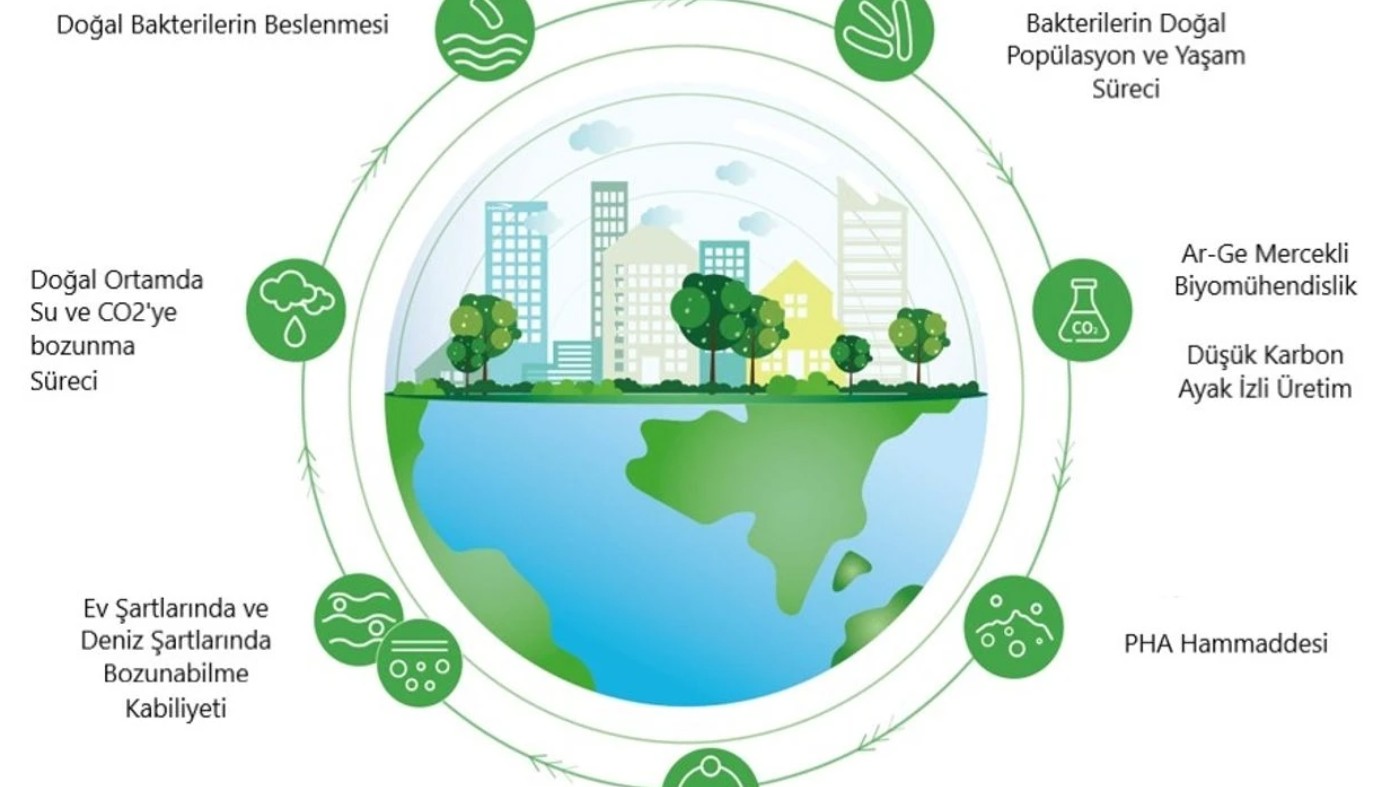
Eroğlu emphasized that the resilience of food supply chains is no longer measured solely by logistics and cost management, but also by the relationship between packaging materials and nature. He described PHA as a silent yet profound revolution in the packaging sector, noting that, unlike synthetic plastics, it is a biopolymer naturally produced by microorganisms. Its ability to complete its natural cycle and avoid leaving microplastics makes PHA a material that resolves one of the biggest contradictions in packaging.
PHA Enables Fully Recyclable Paper Packaging
Eroğlu pointed out that many paper packaging products, perceived as natural today, are coated with plastic films to provide oil and moisture barriers, creating serious challenges for recycling and compostability. This practice removes a large portion of paper packaging from the natural cycle. PHA-coated paper packaging, however, eliminates this paradox. Offering high barrier performance, PHA coatings completely replace plastic films and safely biodegrade in industrial compost, home compost, and marine environments. For the first time, a single material in packaging can be safe across all ecosystems.
Highlighting PHA’s impact on marine ecosystems, Eroğlu shared a striking comparison: a medium-sized PHA-coated paper coffee cup fully decomposes in nature in about 130 days, whereas conventional plastic-coated cups persist 13 times longer, posing microplastic risks. This property makes PHA not only environmentally friendly but also a strategic material for ecosystem safety.
Eroğlu also noted that the European Union is taking concrete steps to increase PHA usage. Large-scale R&D initiatives such as COM4PHA are promoting the use of PHA in food, agricultural, and cosmetic packaging. The EU’s goal is to replace fossil-based polymers like PET, PP, and LDPE with materials compatible with the biological cycle, positioning PHA as the packaging standard of the future.
“The Future of Packaging Lies in Materials That Come from Nature and Return to Nature”
Eroğlu emphasized that this transformation is not theoretical in Turkey. The RecyLoop Sustainable Packaging approach demonstrates the industrial-scale applicability of PHA. This initiative, crowned by the 2025 Sustainable Business Awards—often called the Green Nobel—strengthens Turkey’s potential to take a leading role in sustainable packaging technologies.
Summarizing the future of packaging, PAGEV Chairman Yavuz Eroğlu stated:
"The future of packaging lies in materials like PHA that come from nature and return to nature. These materials represent a new industrial approach capable of protecting both food safety and ecosystems simultaneously."
For more detailed information, click here. Ambalajda PHA devrimi: Tamamen geri dönüşüm artık hayata geçiyor - Fuar Dergisi