
Static electric welding contamination and Solution In Plastic Products
In the case of production facilities ,static electricity can cause many other problems . For example , gas, liquid and dust can cause explosions.
One of the important problems encountered in food packaging production, food production facilities , food filling, sales points and even when the product is used by the consumer is the contamination caused by static electricity .(dirt,dust,feathers,etc.)
At any stage, a product loaded with static electricity will attract all contaminants such as dust, dirt and feathers around it like a magnet. Such problems can be noticed immediately, both in the contaminants on the product and in the packaging of the packaging which has lost its attractiveness due to dust.
In the case of production facilities ,static electricity can cause many other problems . For example , gas, liquid and dust can cause explosions.
They may cause static electric shock to the working personnel. Although this impact is not very short-term and fatal , it can distract the staff and lead to secondary accidents. Static electricity prevents the movement of products in the production lines, slows down the speed of the machine , disrupts the proper operation of automation systems. It can also disrupt static electrical machinery parts , especially electronic cards. Therefore , it is a basic production parameter that should be well understood and controlled in the correct way.
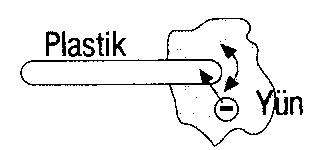
Two friction materials are loaded according to their triboelectric coefficient. It's called static charge. The heat generated during molding creates high pressure and friction static electricity and after molding, it pulls the dust particles loaded in the air towards them and causes dirt and dust to be collected on the product.
Static electricity varies depending on many factors . For example, the type of substance exposed to electrification (raw material used in production) affects the size of static electrification. In addition , repeated processes ( such as friction) increase static electricity. In addition , connecting the parts with static electricity to each other will increase the size of the static electricity as in the batteries attached to each other.
If the material we produce is a conductive material, we can solve the problem by grounding the static charge on it. It will solve the problem by making all the tables(trays) that are spilled on the product and/or processed on the product from a conductive material and connecting them to a real soil line located within the plant. Another method is to use a metal brush according to the product's properties and shape. When the wires of the brush which is conductive are connected to the conductive brush body and the brush body is connected to the ground line, static load of the products touching the brush's wires will be grounded.
In fact, it is not mandatory that the product touches the brush's wires. Even if they are in a certain proximity, they will have the same result. Because, just like in a lightning bolt, they work by 'inducing' the discharge of the electric charge on them.
However, the common problem is the elimination of static load in insulating products rather than conductive products. Insulating materials do not allow the movement of the load on them. Therefore, these loads are like trapped inside and can not be achieved with grounding. The charges on an insulating material can only be neutralized during random jumps of charges from the atom to the atom or molecule to the molecule. So it takes a long time for them to disappear. Most of the antistatic additives sold in the market help to reduce this time. However, they can not be a complete solution to the condensation that will occur immediately after the production.
By placing an opposite load next to a product loaded with insulating and static electricity, each of which is converted into an electric dipole moment, the distance of the electric fields that they cause can be almost zero. One way to accomplish this is to ionize the air around the material. There is already some ion in the air. A method of ionizing air is to use radioactive materials. However, the most common method of creating artificial ion pairs in the air is to use electric fields.
If a high voltage is applied between two pointed conductors, ionization can be achieved. Air ionization devices, also called ion generators, operate in this way.
The device only receives electrons from the air, it does not produce ion, it only activates ions in the air and allows them to increase their number. When ions reach the vicinity of the insulator containing the static charge, they combine with the loads on the surface of the insulator and neutralize them.
However, in the event of a dusty environment, these devices may cause dust to move along with air and, by the way, accumulate more or less on the material. For such cases, direct ionized air directly onto the material with a gun, on the one hand, will eliminate the material from dust while tackling the static problem.
Another important element in static electricity elimination is the moisture element in the air. It is obvious that moist air containing water vapor is more conductive than dry air . Because there are more ion pairs in moist air, some of the static charge is neutralized. In order to achieve this, devices that produce moisture within the production area can be placed. These will significantly reduce the static electricity problem. However , the amount of humidity to be increased in the environment should be planned without forgetting that it will create a suitable environment for the formation of corrosion and bacteria in the machines. Basically, according to the product, raw material (dielectric coefficient), the process stages of the product, the moisture content in the production area, a plan must be created for the elimination of static load. The main elements of this struggle are waiting, humidification, grounding, ion generators (bar, pistol, etc.).) each of them must be positioned within the framework of this plan. A joint study by the packaging manufacturer and the food manufacturer will prevent static loads from being repeated at different points and ensure that hygienic and attractive-looking products are delivered to the consumer.
SEM Plastik carries out an effective work on this subject both within its own body and through universities and independent consultants. Our company is sharing its knowledge and experience with its colleagues in its sector, apart from carrying out joint studies with the important food producers in this sector.
Yavuz Eroğlu
general manager
SEM plastik San.and Tic.A.S.